

A fire changes everything in an instant. One moment you’re living your normal routine, and the next, you’re standing outside watching smoke, chaos, and uncertainty take over. In that moment and in the days that follow the role of a fire insurance adjuster becomes critically important. Not just as a technical expert, but as a deciding force in how much you recover financially.
I’ve seen it firsthand. The difference between a poorly handled claim and a well-managed one can mean tens of thousands of dollars. Sometimes more. And the gap often comes down to how the fire insurance adjuster process is handled. Let’s break it down. Clearly. Practically. And in a way that actually helps you take control.
What Is a Fire Insurance Adjuster?
A fire insurance adjuster is the professional responsible for evaluating fire damage, interpreting your insurance policy, and determining how much compensation you receive. Sounds straightforward. It’s not.
Their responsibilities include:
- Inspecting the damaged property
- Documenting losses (structure and contents)
- Estimating repair or replacement costs
- Reviewing your insurance coverage
- Negotiating the final settlement
Here’s the key detail most people miss: not all adjusters work for you.
Types of Fire Insurance Adjusters Explained
Understanding who you’re dealing with is step one. It changes everything.
1. Company (Staff) Adjuster
- Works directly for your insurance company
- Paid by the insurer
- Focus: protect company interests
2. Independent Adjuster
- Hired by insurance companies during high claim volume
- Still represents the insurer
- Often handles multiple cases quickly
3. Public Adjuster
- Works for you, the policyholder
- Negotiates on your behalf
- Focus: maximize your payout
If you remember one thing from this article, let it be this:
The fire insurance adjuster assigned by your insurance company is not your advocate.
What Does a Fire Insurance Adjuster Actually Do?
Let’s get practical. What happens after you file a claim?
Here’s how a typical fire insurance adjuster operates:
- Initial Inspection
- Damage Documentation
- Estimate Preparation
- Policy Review
- Settlement Offer
Short version?
They assess. They calculate. They propose.
But here’s the catch: they don’t always capture the full scope of your loss.
The Fire Insurance Claim Process (Step-by-Step)
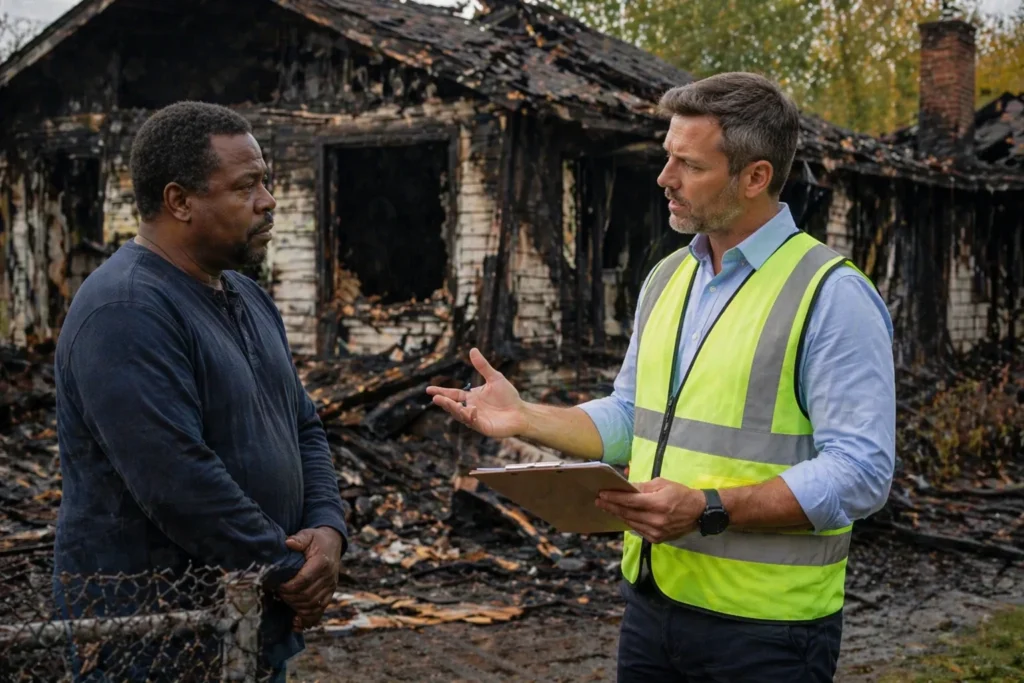
Step 1: Filing the Claim
You notify your insurer and a fire insurance adjuster is assigned.
Step 2: Damage Assessment
Inspection begins. First impressions matter here.
Step 3: Documentation & Inventory
You list everything. Yes everything.
Step 4: Estimate Review
Numbers are calculated. This is where scrutiny is critical.
Step 5: Negotiation & Settlement
Offers go back and forth until agreement is reached.
Common Challenges Homeowners Face After Fire Damage
- Underestimated repair costs
- Hidden smoke and soot damage
- Delays and poor communication
- Complex policy wording
- Emotional stress impacting decisions
How a Public Fire Insurance Adjuster Helps You
A public fire insurance adjuster shifts the balance in your favor.
They:
- Document thoroughly
- Interpret policy details
- Negotiate aggressively
- Maximize your payout
And importantly they reduce your stress dramatically.
Fire Damage Isn’t Just Flames
| Type of Damage | What It Includes | Why It Matters |
| Structural | Walls, roof | Safety and rebuild cost |
| Smoke | Odor, residue | Spreads throughout home |
| Soot | Corrosive particles | Damages surfaces |
| Water | Firefighting runoff | Leads to mold |
| Systems | Electrical, HVAC | Hidden expenses |
How Fire Insurance Adjusters Calculate Your Claim
- Replacement Cost vs Actual Cash Value
- Depreciation
- Policy limits
- Deductibles
These variables directly shape your payout.
Top Mistakes to Avoid When Dealing With a Fire Insurance Adjuster
- Accepting the first offer
- Poor documentation
- Discarding damaged items too early
- Ignoring policy details
- Handling the claim alone
When Should You Hire a Public Adjuster for Fire Damage?
- Large losses
- Disputed claims
- Low settlement offers
- Overwhelming process
Early action almost always leads to better results.
Fire Insurance Adjuster vs Contractor
- Adjuster → evaluates and negotiates
- Contractor → rebuilds and repairs
Two roles. One goal: recovery.
Real-Life Scenario: The Power of Representation
Initial offer: $65,000
After public adjuster involvement: $110,000
That gap? It’s expertise.
Tips to Maximize Your Fire Insurance Claim
- Document everything immediately
- Take photos and videos
- Keep receipts
- Request detailed estimates
- Get professional help early
Why Richardson Public Adjuster Stands Out
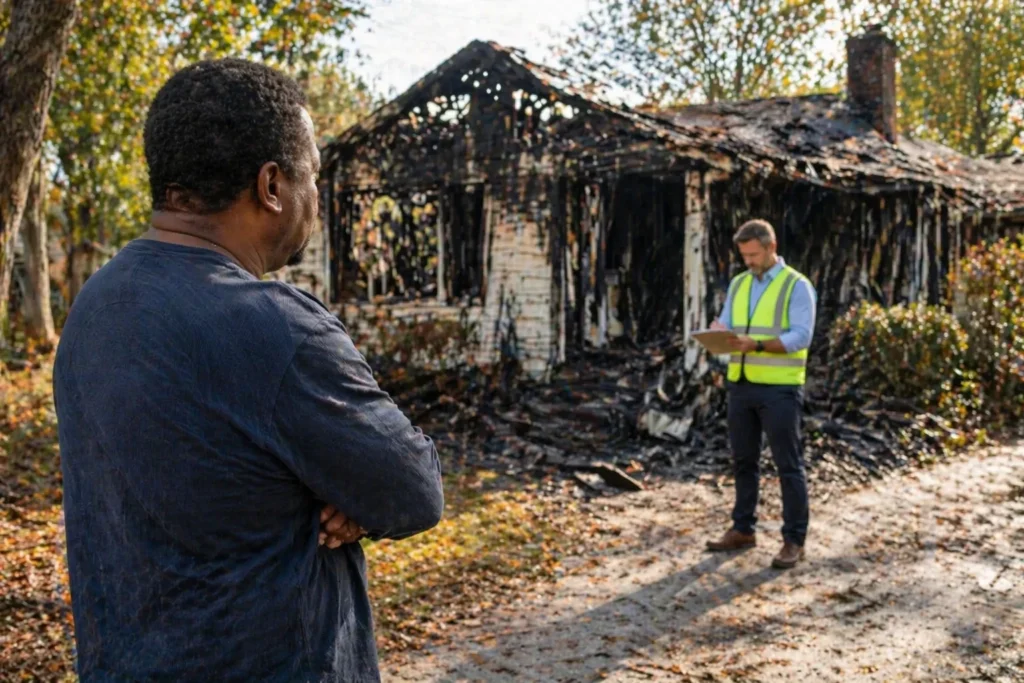
They bring:
- Local expertise
- Proven results
- Personalized claim strategies
And most importantly they advocate for you.
Understanding the Complexity Behind the Process
Insurance claims often feel overwhelming because they involve layered evaluations, structured decision-making, and interconnected variables. In many ways, this complexity mirrors advanced frameworks like Homological algebra, where multiple elements interact within a system to produce a final outcome.
You don’t need to understand the theory.
But you absolutely need to understand the system or have someone on your side who does.
Conclusion: Take Control of Your Fire Insurance Claim
A fire insurance claim isn’t just paperwork. It’s your financial recovery. The fire insurance adjuster involved in your case will directly influence your outcome. So take control. Stay informed. Push for accuracy. And when necessary, bring in someone who works for you not the insurance company. Because in this process, small decisions lead to big financial consequences.
FAQs
A fire insurance adjuster evaluates fire damage, reviews your policy, and determines how much compensation you should receive from your insurance claim.
Not always. Insurance company adjusters represent the insurer, while a public fire insurance adjuster works on your behalf.
You should consider hiring one for large losses, disputed claims, or when you feel your settlement offer is too low.
Most public adjusters work on a contingency fee, meaning they take a percentage of your final settlement rather than charging upfront.
Yes, you can negotiate the settlement, especially if you have strong documentation or professional support.
Avoid guessing details or admitting fault; stick to verified facts and documented information to protect your claim.
It can take weeks to months depending on the severity of damage, documentation quality, and how smoothly negotiations go.
Replacement cost covers the full cost to replace items, while actual cash value deducts depreciation, resulting in a lower payout.
Yes, especially hidden issues like smoke, soot, or structural damage, which is why thorough documentation and second opinions are important.
Not necessarily, but having a contractor’s estimate can strengthen your claim and support higher settlement negotiations.